How to Shot List an Action Scene Without Blowing Your Schedule
Action scenes don't need more coverage. They need the right coverage. Here's a decision tree for figuring out which setups actually earn their place on your call sheet — and which ones are just eating your day.
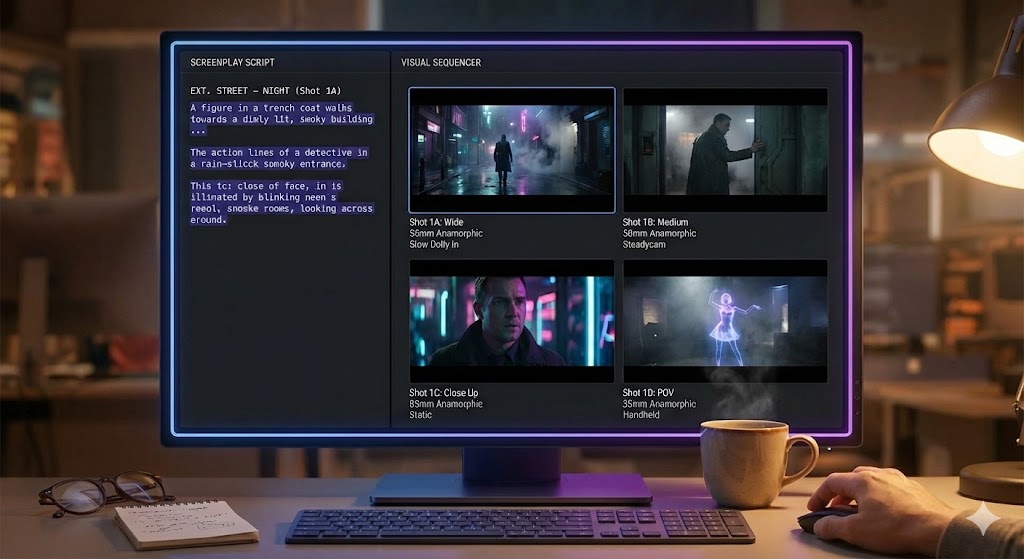
The Coverage Trap
Open almost any shot list for an action scene on a low-budget indie set and you'll see the same pattern: a wide, a couple of mediums, close-ups on both fighters, an insert on the knife, a low angle for drama, a Dutch angle because it's action, a few more inserts "just in case," and a slow-motion pass on the hero beat. That's ten-plus setups for a scene that plays for maybe twenty seconds on screen.
None of those shots are wrong on their own. The problem is that nobody asked whether the edit needs all of them, and on a schedule with no slack, every setup you add is a setup something else loses. Default over-coverage is the single most common way a low-budget shoot day quietly collapses.
"Shoot it from every angle and figure it out in the edit" works when you have the crew, the light, and the hours of a real action unit. On a one-day indie shoot it means you run out of time on shot 6 of 11, the last five shots get rushed or cut, and the scene you actually needed most — often the emotional beat right after the fight — gets sacrificed to cover a reaction shot nobody ends up using.
This post is a decision tree, not a shot count. It won't tell you "action scenes need eight setups." It'll tell you how to figure out how many your scene needs, and how to defend cutting the rest before you're on set discovering it the hard way.
Start From the Edit, Not the Setup List
The instinct on action scenes is to think in setups: master, mediums, close-ups, inserts, repeat. Flip it. Before you write a single shot, ask what the scene needs to do for the audience — and only then figure out which setups deliver that.
Three Jobs an Action Beat Can Do
Geography
Where is everyone, relative to each other and the space? Who has the upper hand right now?
Impact
Does this specific moment need to land physically — a hit, a fall, a near miss? This is what most extra coverage chases.
Stakes
Whose face do we need to see to understand what this beat costs them? Often only one character's reaction actually matters.
A beat that's doing geography work needs a WIDE or FULL shot with clean staging — camera angle and movement matter more than shot count. A beat that's doing impact work might need one well-timed CU or an insert, not three. A beat that's doing stakes work needs a close-up on the right face, not both faces "to be safe."
If you've never run a scene through a full breakdown before, our script-to-shot-list tutorial walks through lining a scene and applying the three-tier coverage system step by step — worth doing once on a quiet dialogue scene before you try it under the time pressure of an action sequence.
The Decision Tree: Four Questions Before You Add a Setup
For every beat in the action scene, run it through these four questions in order. The moment you get a "no," stop adding coverage to that beat and move to the next one.
1. Does the edit have another way to show this?
If the geography is already established by an earlier wide, you may not need to re-establish it every beat. Reusing a previous angle's spatial logic is free — a new setup is not.
2. Is this a beat the audience needs to feel, or just a beat that needs to happen?
Plot-necessary beats ("he gets the gun away from her") often need exactly one clean shot that reads unambiguously. Feeling-necessary beats ("she realizes she might lose") are where a close-up earns its setup time.
3. Can this be covered by staging instead of an extra camera setup?
Blocking two beats to happen in the same frame — moving the actors instead of moving the camera — is often faster than lighting and shooting a second angle. If you're restaging a beat anyway to fix an earlier take, check whether the restage can absorb an angle you were planning to shoot separately.
4. If this shot didn't exist, would the scene still cut together?
This is the honest test. If you can picture the scene playing fine without it, it's a "nice to have," not a "need to have" — and nice-to-haves are exactly what should get cut first when the day runs long, not discovered as the reason you're losing daylight on shot 9.
Once every beat has passed the four questions, rank the surviving setups 1 through N in order of "the scene falls apart without this." Shoot in that order, not script order. If the day gets cut short, you keep the scene — you just lose the polish shots at the bottom of the list instead of a beat you actually needed.
Matching Density to Budget Reality
Coverage density isn't a creative constant — it's a function of how much time and crew you actually have. A one-page fight scene that's genuinely 3 setups on a one-day shoot might reasonably be 12 setups on a scene with a stunt team, a second unit, and two shoot days. Neither number is "correct" in the abstract. What's wrong is picking the 12-setup version because that's what action scenes "should" look like, then discovering on set that you only had time and light for 5.
A Rough Budget-to-Density Guide
| Shoot context | Realistic setups per page | Where the discipline comes from |
|---|---|---|
| Solo or two-person crew, one day | 2–4 | Every setup is a full relight and reset — budget accordingly |
| Small indie crew, dedicated stunt block | 4–7 | Some setups can share lighting or camera position |
| Full crew, second unit available | 8+ | Coverage can be genuinely exhaustive because time isn't the constraint |
Where this actually bites is scheduling, not shooting. A shot list that looks reasonable on paper can still wreck a day if nobody converts "11 setups" into "11 setups × relight time × company move time" before the day starts. That conversion is a scheduling problem more than a coverage problem — and if your production is still figuring out whether it needs real scheduling software or just a shot list and a day sheet, that's a separate question worth answering honestly before you buy tooling you won't use. We cover exactly that in Do I Need a Stripboard?
Every "just in case" insert you add to an action scene doesn't cost you the 15 minutes to shoot it — it costs you the 15 minutes plus the reset, plus the chance it pushes a later scene into golden hour or overtime. On a tight day, a shot list is a budget, and every line item has to justify its place.
A Worked Example: Three Coverage Levels, One Fight
Take a simple beat: two characters struggle over a weapon in a hallway, one wins. Here's how the same beat scales across three honest budget realities — none of them wrong, each matched to what's actually available.
Minimal (solo/two-person crew)
One FULL shot, STATIC, wide enough to read the struggle and the outcome clearly. One CU insert on the hands at the moment of disarm. Two setups, two relights. The scene reads. Nothing is lost except polish.
Standard (small crew, one stunt block)
A MED master with HANDHELD movement for energy, CU reactions on the character who loses, and the same disarm insert. Three setups. Adds emotional stakes without adding a second shoot day.
Full coverage (full crew, second unit)
Master, OTS on each character, CU on both faces, disarm insert, a LOW ANGLE for the winning beat, and a slow-motion pass on the disarm. Six-plus setups. Justified because the crew and hours exist to support the relights and resets each one needs.
The disarm insert appears in all three because it passes every question in the decision tree: the edit needs it, it's a stakes beat, staging can't substitute for it, and the scene doesn't fully read without it. The slow-motion pass only survives in the version with the hours to support it — which is exactly the point.
Bringing It Back to Your Shot List
Coverage density for an action scene isn't a genre default — it's a decision, scene by scene, beat by beat, made against the schedule you actually have. Run each beat through the four questions, rank what survives, and shoot the ranked list in order so a short day costs you polish instead of story.
Once you know which setups a scene actually needs, entering them into a structured shot list — with shot size, angle, movement, and a source line back to the script — is what turns the decision tree into something your crew can execute on the day. That's the same shot list workflow we walk through in the script-to-shot-list tutorial, applied to a scene with higher stakes and less room for error.
Plan Coverage Against Your Actual Day
ShotList.Studio turns a script into a structured shot list with shot size, angle, and movement attached to every setup — so you can rank coverage by what the edit needs before you're standing on set deciding under pressure.
Get Started →