How to Brief a Storyboard Artist So You Get Back What You Needed
A storyboard artist can draw almost anything you ask for. The problem is rarely their skill — it's a brief that never told them what mattered. Here's what to hand over before the first sketch, and just as important, what to leave alone.
Introduction: The Brief Is the Bottleneck
Most first drafts that come back "wrong" from a storyboard artist weren't drawn wrong. They were drawn to a brief that left too much open, and the artist made reasonable choices that didn't happen to match the picture in the director's head. That's not a skill gap — it's a communication gap, and it sits entirely on the side of whoever wrote the brief.
The fix isn't a stricter artist. It's a better brief. A storyboard artist works fastest and closest to your intent when you hand them exactly three things: a shot list that's already been decided, reference material that shows rather than describes, and the emotional job each panel has to do. Everything past that — how to draw it, where to put the horizon line, how heavy the linework is — is their craft, not yours, and trying to specify it usually produces worse boards, not better ones.
- The three inputs a storyboard artist actually needs before drawing a single panel
- How to describe an emotional beat without dictating the composition that delivers it
- Where an AI-generated prototype belongs in the brief — and where it doesn't
- What to explicitly leave open, so the artist's judgment can do its job
This extends the ladder laid out in storyboarding when you can't draw, which ends at "hire a professional artist for anything that has to carry production." This post picks up exactly there: once you've decided to hire, how do you brief them well enough that hiring them was worth it?
Bring a Locked Shot List
Decide the coverage before the artist starts drawing it
A storyboard artist is not the person who decides your shot sizes and angles — that's a directing decision, made against the script, before the brief is even written. Handing over an undecided shot list and asking the artist to "figure out the coverage" pushes a directing job onto an illustration job, and you'll pay for it in revision rounds when the coverage they guessed doesn't match what you actually needed.
What "Locked" Means in Practice
shot_list_scene_14.txt
Shot 1 — WIDE, EYE LEVEL, STATIC
  Establish the room, both characters seated
Shot 2 — MED, EYE LEVEL, STATIC
  Two-shot across the table
Shot 3 — CU, EYE LEVEL, STATIC
  Sarah, reacting
Shot 4 — CU, LOW ANGLE, STATIC
  Marcus, delivering the line
Shot 5 — ECU, STATIC
  Hands on the table, the ring visible
Every field here — shot size, angle, movement, and a one-line note on content — is a decision you've already made, not a question you're handing to the artist. This is exactly the structured shorthand covered in storyboard vs. shot list: the shot list is the plan, the storyboard is the visualization of that plan. Confusing the order costs you the artist's time redoing coverage decisions that were never theirs to make.
If your shot list still has open questions — "not sure if this needs a two-shot or two singles" — resolve those before the brief goes out, even if the answer is a guess you might revise later. An artist working from an unresolved list will resolve it for you, invisibly, and you won't find out until the boards come back.
Bring Reference Frames
Show the scene, don't just describe it
Words are a lossy format for visual intent. "A tense, cramped kitchen" means something different to every person who reads it. Reference material closes that gap in a way description never fully can — photos of the actual location, stills from films with a comparable look, or quick visual drafts of the scene itself.
Location Photos
The actual scouted space, so the artist draws the real geometry instead of an imagined room that won't match the shoot.
Mood References
Frames from other films that capture the lighting or tone you're after — cited as tone reference, not as something to copy.
Quick Visual Drafts
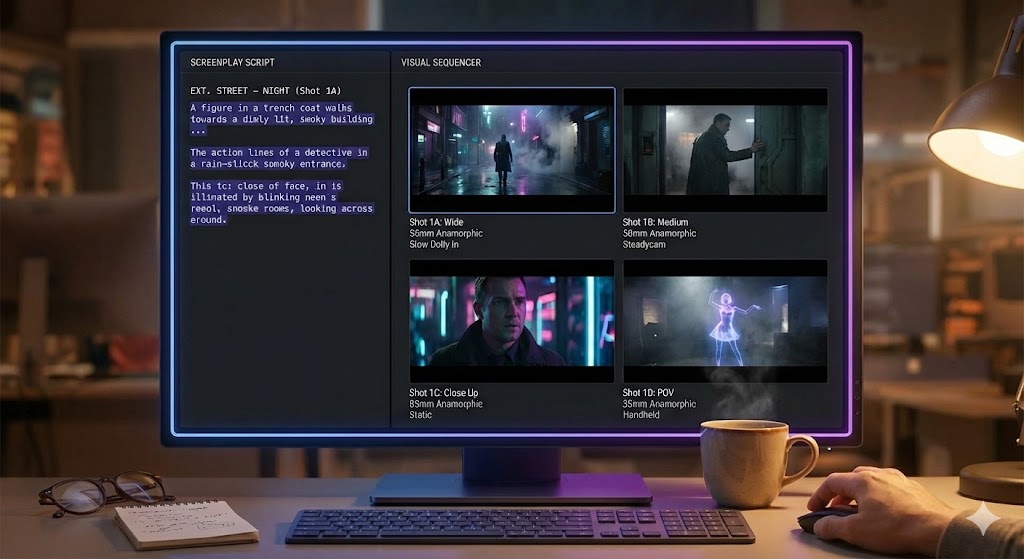
A rough prototype of the scene's staging, so the artist starts from your intent instead of a blank page and a paragraph of description.
The point of every item in that list is the same: reduce the number of things the artist has to invent from your prose alone. Every fact you can show instead of describe is one less place where their interpretation and your intent can quietly diverge.
State the Emotional Beat Per Panel
What the shot needs the audience to feel, not just show
This is the input most briefs skip entirely, and it's arguably the most valuable one you can give. A shot list tells an artist the mechanics — size, angle, movement. It doesn't tell them why that shot exists in the story. A single sentence about the beat changes how a competent artist draws the same technical shot.
Take Shot 3 from the example above: CU, EYE LEVEL, STATIC — Sarah, reacting. That's a valid, complete shot-list line, and it leaves the single most important creative question unanswered: reacting how? "Sarah realizes he's lying, and she's deciding whether to call it out" produces a very different drawing than "Sarah is trying not to laugh." Same coverage, same size, same angle — completely different expression, timing implied in the panel, and probably a different framing choice inside that CU once the artist understands what's actually happening in the character.
You don't need a paragraph. "The audience should feel her hesitate right before she decides to lie" is enough. It's the difference between an artist drawing a generic close-up and an artist drawing the actual moment your scene turns on.
What to Leave to the Artist
A brief can also fail by being too specific. If you dictate exact composition, line weight, camera lens choice down to the millimeter, and rendering style, you've hired an illustrator to trace your own imagination instead of contribute their craft to it — and you're paying for expertise you're actively preventing them from using.
Exact Composition Within the Frame
You've told them the shot size and the beat. Precisely where the eye should land inside that frame is a composition decision — that's their training, not yours.
Rendering Style and Line Weight
Loose gesture sketches versus tight rendered panels is a pacing and budget conversation to have once, at the start of the relationship — not a note on every panel.
How to Solve a Staging Problem You Flagged
If a scene's blocking is awkward, say so and describe the constraint. Let the artist propose the fix — they solve spatial storytelling problems for a living, and their solution may be better than the one you'd have dictated.
A good rule of thumb: if a note is about what the shot needs to accomplish, it belongs in the brief. If it's about how to accomplish it visually, it belongs to the artist unless something specific about the production genuinely constrains it — a VFX plate that needs a fixed camera position, for instance, is a real constraint worth stating explicitly.
Where AI Prototypes Fit in the Brief
An AI-generated storyboard prototype is one of the strongest reference materials you can bring to a professional artist, and it's worth being precise about why: it's an input to the brief, not a replacement for the artist drawing it. The argument for that distinction is made in full in will AI replace storyboard artists — a production designer's honest answer from a team that builds an AI storyboard tool and still hires artists for anything that has to carry a production.
Used this way, a quick AI prototype of your scene's staging does exactly what a location photo or a mood reference does: it shows the artist your intent instead of making them extract it from prose. You get a scene's worth of rough visual drafts in minutes, adjust the ones that read wrong, and hand the corrected version over as part of the reference package — the artist starts from something close to your vision instead of a blank page, and spends their time on the craft that actually needed a human: expression, composition, and the visual judgment a generator can't reliably hold across a whole sequence.
Don't hand over an AI-generated frame and ask the artist to "clean it up" panel for panel — that treats their expertise as a polish pass rather than the composition and continuity judgment you actually hired them for. Use the prototype to communicate intent, then let them draw the scene properly.
On cost: a storyboard artist's rates vary by experience, sequence complexity, and market, and there's no single figure worth quoting here. Get quotes from more than one artist before committing, the same way you would for any other department head, and treat a well-prepared brief as the thing that keeps that quote from ballooning through avoidable revision rounds — not as a way to talk the rate down.
A Good Brief Is a Form of Respect
The directors who get the best work back from storyboard artists aren't the ones who write the longest briefs — they're the ones who write the most precise ones. Decide your coverage before you hand it over. Show the scene instead of describing it. Say what each panel needs the audience to feel. Then step back and let a professional do the part of the job you hired them for.
A vague brief doesn't save you time — it just moves the work of deciding your scene into a series of revision rounds, at the artist's hourly cost instead of your planning time. Do the planning first. It's cheaper every way that matters.
Walk Into the Brief With Something to Show
ShotList.Studio turns your shot list into draft storyboard frames in minutes — reference material that shows your intent to an artist instead of leaving them to guess it from a page of description.
See the tool